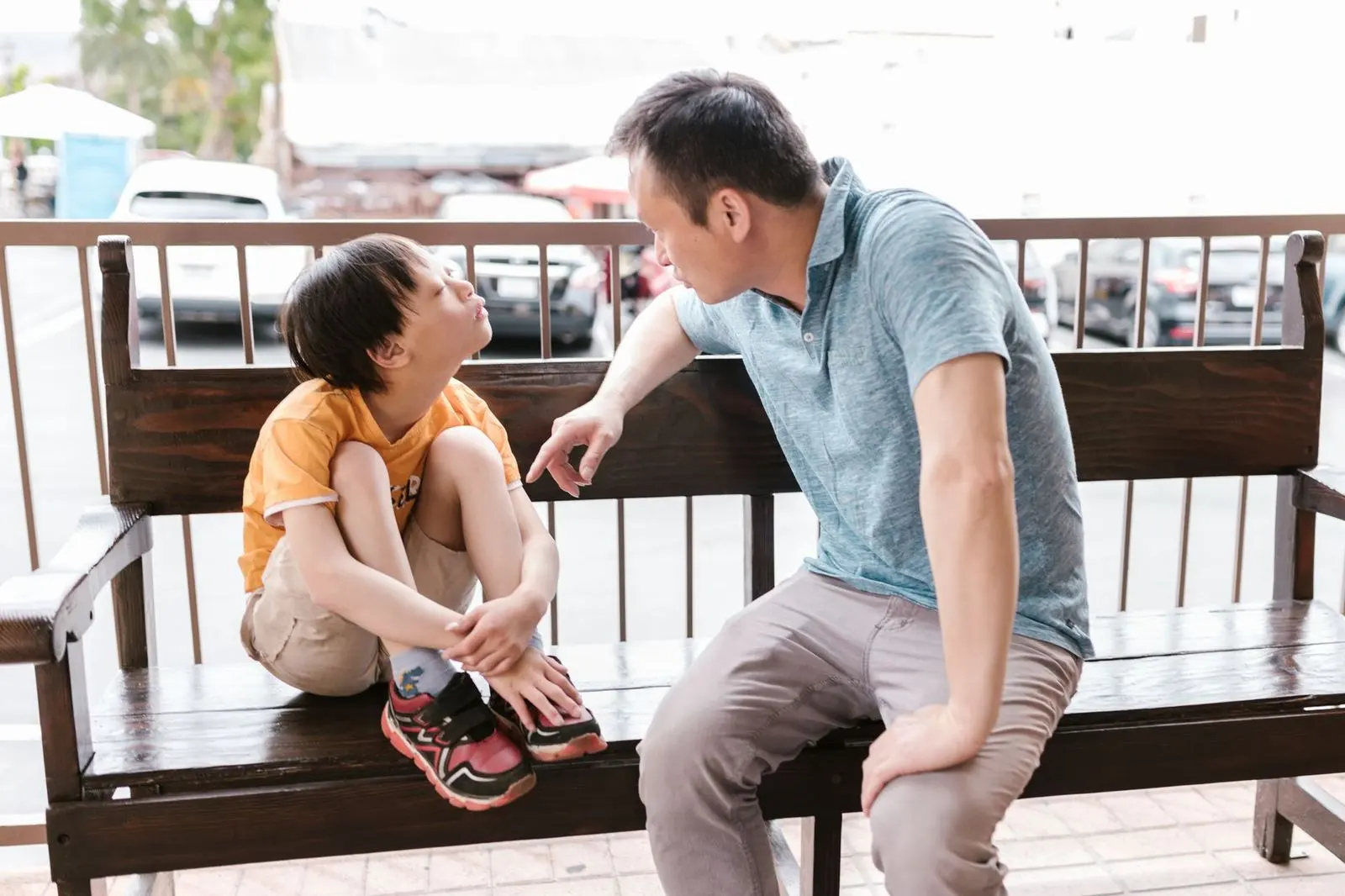

Worried your child could get separated from you on a trip? A child ID bracelet for travel can help, if it carries your phone number rather than your child’s name. Pair it with a simple family plan.
For the conversations that go with any ID, see our guide on talking to kids about staying safe while traveling.
| Item | Value |
|---|---|
| Minimum ID details to keep on a card or in a file | Recent photo, height and weight; ideally fingerprints |
| Cards and bands for children who tend to wander | Name and address cards, identifying wristbands, medic alert tags |
| What to write on a label or sticker for a busy place | Your cell phone number |
| Your child’s name on visible ID | Keep it out of public view |
| Children with autism over age 4 who had gone missing at least once | Half, per a Pediatrics study |
| Abductions of children by strangers | Rare |
These figures come from the American Academy of Pediatrics (HealthyChildren.org) and MissingKids.ca. Guidance can change, so check the sources before you rely on them.
Do child ID bracelets help when you travel?
A child ID bracelet is a wearable version of an ID card: its job is to get your contact details to a helpful adult quickly. None of the sources behind this guide measure how well bracelets work, so treat one as a single layer of protection, not a guarantee.
It helps to keep the worry in proportion. The AAP says abductions by strangers are rare, and that when children go missing it is usually after they wander off without realizing the danger, as described on its HealthyChildren.org safety page. That makes a plan for getting reunited fast more useful than fear.

What to put on a bracelet, card or sticker
For busy public places, MissingKids.ca suggests writing your cell phone number on a label or sticker and placing it on your child before you enter the event or area.
The same page says not to write your child’s name anywhere the public can see it. A child who hears their name called is more likely to respond to, or follow, someone they do not know. So choose a band that shows your number, not a personalized name.
On a trip, also check that the number printed is one you will actually answer while you are away from home.
What belongs in an ID kit instead
A wristband holds a line or two. The fuller details belong in a kit you can hand to staff or police, and Nationwide Children’s Hospital suggests a log that includes:
- Your child’s full name and any nicknames they respond to
- Address and date of birth
- Height, weight, and hair and eye color
- Distinguishing characteristics, such as birth marks or glasses
- Medical information
- An up-to-date photo
The AAP’s minimum is a recent photo, height and weight on a card or in a file, with fingerprints ideal, and it notes that a Child ID kit for home is available from missingkids.org (AAP guidance). A phone alternative is the FBI’s Child ID app, which stores photos and details so they can be shared quickly with authorities, according to an Office of Justice Programs page modified May 16, 2023.
A plan that works with or without a bracelet
An ID only helps once someone reads it, so the habits around it matter more. These steps draw on MissingKids.ca and Nationwide Children’s Hospital:
- Agree a meeting place that is clearly visible, and tell older children to stay there if you are separated.
- Teach young children to sit down and stay where they are, and to call out loudly for the adult they are with.
- Point out a “safe stranger”, such as a cashier, another store employee or a parent with children, to ask for help.
- Dress your child in bright, distinctive clothing in crowded places.
- Take a photo of your child in that day’s clothes before a busy event.
- Look for events that run programs for children who get separated from their parents, and use them.
Our checklist for preparing kids for first trip abroad places these steps in a wider routine. Practising them feels easier when it sits inside calm, age-appropriate conversations like those in our guide to body safety for kids.
Extra care for children who wander
The AAP cites a study in Pediatrics that estimated half of children with autism over age 4 had gone missing at least once. Many were drawn to water, highways or railroads, according to the AAP’s safety page.
For these children the AAP says name and address cards, identifying wristbands and medic alert tags can be carried, and a name marked inside clothing may help. It also lists wearable GPS devices, such as clip-on units and watches, as options.
The AAP adds that people outside the family can use location devices too, so talk through settings with older children. Your pediatrician can help you build a family wandering emergency plan before you travel.
If your child does get separated
Nationwide Children’s reports that the National Center for Missing & Exploited Children (NCMEC) calls the first three hours after a disappearance the most crucial window for an initial response. The hospital advises acting immediately, contacting local law enforcement and telling the store manager or security office, as set out on its holiday crowds safety page.
Before you leave, find out which emergency number applies at your destination and keep your ID kit where you can reach it. The description in that kit is what you will be asked for first.
Frequently asked questions
Should my child’s name be on the bracelet?
Show answer
Usually not. MissingKids.ca warns that a child called by name may be more willing to go with an unfamiliar person, so anything visible is better limited to a phone number. A name written inside clothing, which the AAP mentions for children who wander, stays out of sight.
Is a GPS tracker better than a bracelet?
Show answer
They do different jobs. The AAP presents trackers and ID bands as separate options for children who tend to wander, and it points out a trade-off: people outside the family can use location devices as well.
Is a bracelet enough on its own?
Show answer
No. A band only works if a helpful adult notices it, so your child also needs to know where to wait, whom to approach and what you expect of them.
What about older children?
Show answer
MissingKids.ca recommends that they ask you before going anywhere and tell you where they are headed, who will be there and when they will return. A clearly visible meeting point gives them a fallback if you lose each other.