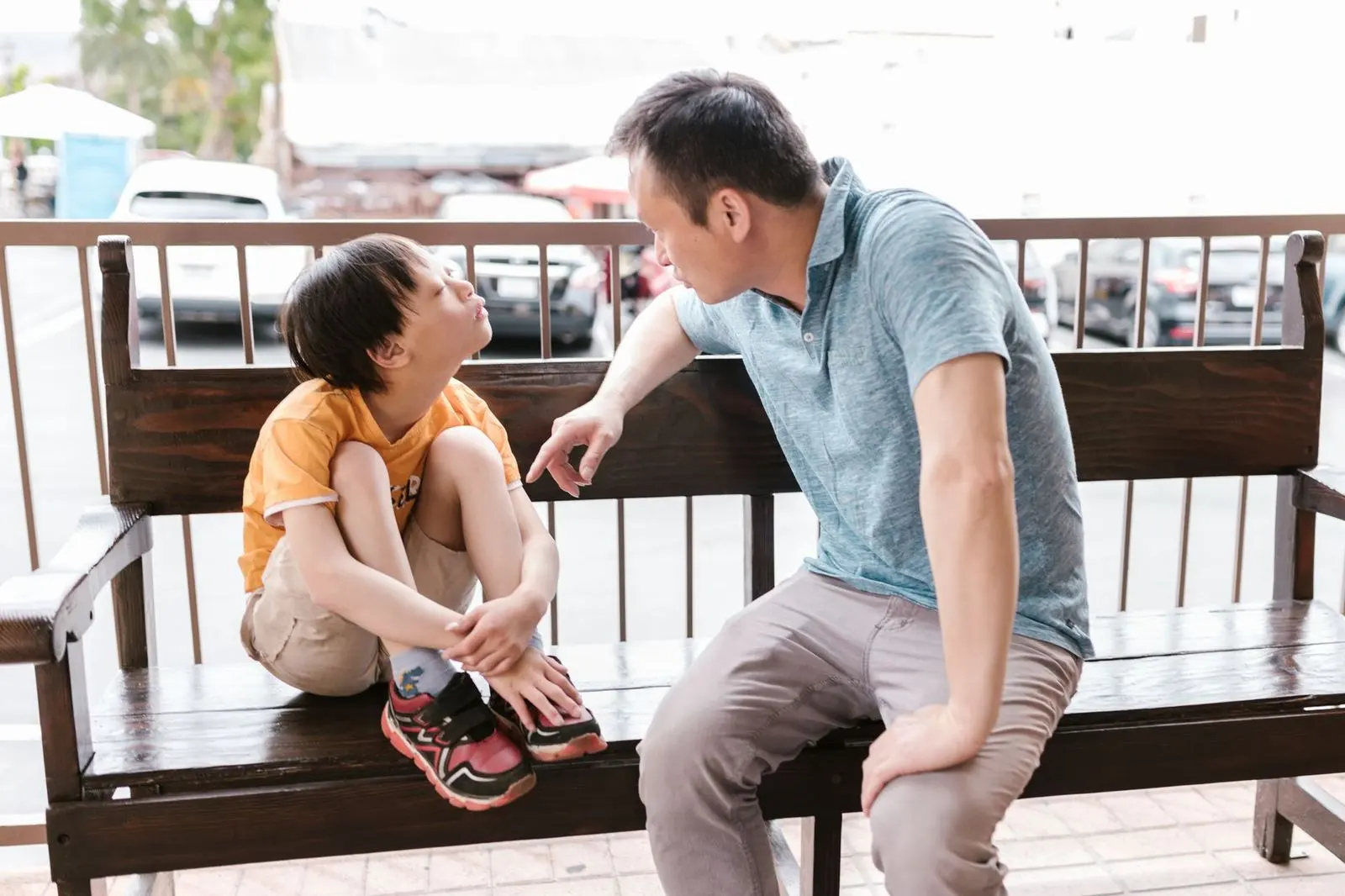

You want your child to know who to turn to when you are away from home. To teach kids who safe adults are, name a few trusted people, show that safe adults respect “no”, and practise asking for help.
This page sits inside the wider guide to talking to kids about staying safe while traveling, which covers the other conversations worth having before a trip.
| Item | Key fact |
|---|---|
| Who children are more likely to be harmed by | Someone they know |
| Phrase to teach for refusing unwanted touch | “stop, I don’t like it” |
| Rule about secrets | No secrets, just surprises |
| Names to use for body parts | Correct anatomical names |
| Way to practise boundaries | Role playing |
| Greeting choices to offer a child | A hug, a blown kiss, a wave, a high five or not at all |
These points come from NCMEC’s guidance on being a trusted adult and Action for Children’s advice on teaching young children about consent. Guidance can change, so check those pages before you rely on them.
Who counts as a safe adult?
A safe adult is defined by behaviour, not by title or familiarity. NCMEC’s guidance says trusted adults respect children’s bodies and boundaries and listen and respond to children’s concerns.
The same page states that children are much more likely to be abducted or abused by someone they know. It adds that this can make it hard for a child to judge which adult behaviours are inappropriate, especially when the person claims to love the child or is an authority the child has been told to respect.
So give your child a simple picture of what safe behaviour looks like, in plain words:
- They ask before touching and accept “no” as an answer.
- They take even small worries seriously.
- They do not ask a child to keep secrets.
- They answer questions openly and in age-appropriate ways.
Before a trip, sit down together and name the specific adults your child can go to, starting with the people travelling with you. Parents weighing childcare away from home often start with the question is hotel babysitting safe, which has its own guide.
Start with choices about touch and saying no
Action for Children’s Parent Talk advice says it is important to teach your child that their body belongs to them and that what they do with it is their choice. NCMEC makes a similar point: trusted adults help children assert their boundaries from a young age.
Greetings are an easy place to practise. Action for Children suggests asking which of these your child would like:
- A hug
- A blown kiss
- A wave
- A high five
- Nothing at all at the moment
Then respect the answer. The advice is not to show disappointment or try to persuade, because that can make a child feel they must do something they don’t want in order to please you.
Tell relatives and friends what you are doing and why, so they do not pressure your child either. NCMEC’s sample wording for this conversation thanks other adults for not forcing children to give a hug if they do not want to.
Be honest that some touch is still needed. Action for Children suggests explaining that a trusted adult will sometimes need to touch a child even if the child doesn’t want it, such as at the doctor’s or to keep them safe in a car seat or buggy.
Give your child words, feelings and the surprise rule
Children need a phrase that is easy to say under pressure. Action for Children suggests teaching something like “stop, I don’t like it” for use when another child or adult is playing in a way they dislike.
The phrase only works if you honour it. When your child tells you to stop, show that you have heard them, and stop straight away.
Feelings are a signal too. The same page describes a bad feeling that might show up as:
- Butterflies in the tummy
- Sweating
- Feeling sick
- Legs going wobbly
Tell your child not to ignore that feeling, and to tell an adult they feel safe with if somebody causes it.
Action for Children also suggests a simple swap: no secrets, just surprises. A surprise, such as a party, is exciting and eventually everybody knows, whereas a secret makes a child feel uncomfortable and should be shared with a safe adult.
Language matters as well. Action for Children says that using the correct anatomical names for body parts helps children communicate clearly, and that cute words can be misleading. It also warns that adult embarrassment can leave children thinking those parts are shameful and not to be talked about.
Practise how to ask for help before you travel
Knowing a rule is different from using it. NCMEC says role playing can help children practise being assertive about their boundaries, and its guidance includes short example conversations.
In a sample script for talking to other adults, NCMEC makes the point that kids who understand boundaries early are better prepared to spot and report abuse. That is a good reason to keep practising, even when it feels awkward.
A simple routine you can follow at home:
- Name the safe adults together, such as the family members travelling with you, and agree who to go to if you are not nearby.
- Rehearse a short sentence for asking for help, such as “I don’t feel okay about this. Can you help me?”
- Act out everyday scenes from the places you will visit, and let your child practise saying “stop, I don’t like it”.
- Come back to the conversation often, because Action for Children notes that a child’s choice might not always be the same.
Keep each practice session short and calm, so it feels normal rather than frightening.

How should you respond when your child tells you something?
When a child raises a safety concern, NCMEC says it is important to take it seriously, even if the issue seems small. Listening closely and treating it thoughtfully builds a child’s confidence that they can trust you to help when they are in trouble, as NCMEC’s guidance explains.
It also helps to be comfortable with the words yourself. NCMEC suggests getting comfortable with topics or terms that have felt uncomfortable in the past, and notes that abusers are emboldened by the taboo around talking to children about sex and sexual development.
For more on age-appropriate language about bodies, see this guide to body safety for kids.
If you are worried that a child has experienced abuse, Action for Children’s advice is to call the police, and its page lists helplines for families in the UK. This site is independent, cannot take reports and cannot advise on individual cases, so use official local services.
Frequently asked questions
When should I start talking about safe adults?
Show answer
Early is better. Action for Children says teaching consent from a young age helps children understand healthy relationships as a teenager. A trip is a good prompt, but you do not need to wait for one.
Do I have to make my child hug relatives goodbye?
Show answer
The guidance suggests asking rather than telling. Relatives often want a hug, but Action for Children’s point is that what your child wants is what matters, so let them choose a gentler goodbye if they prefer.
Are strangers the main thing to warn children about?
Show answer
Warnings about strangers alone can leave a gap. NCMEC says harm is more likely to come from a person a child knows, so it helps to teach behaviours to look out for, such as ignoring “no” or asking for secrecy, rather than a type of person.
What is PANTS (The Underwear Rule)?
Show answer
Action for Children points parents to the NSPCC’s PANTS (The Underwear Rule) as a fun and engaging way to explain to young children that their private parts belong to them. The same page also recommends children’s books on consent and body boundaries.