Packing for a trip with your kids is easier when the paperwork is sorted early. For travel documents for children, plan on their own passport, plus a signed consent letter if they travel without both parents.
This guide sits within the wider topic of child safe family travel, and focuses on the papers families are commonly asked for.
| Item | Key fact |
|---|---|
| Letter of consent (U.S. guidance) | May be needed when a child travels alone or with only one parent or legal guardian |
| Preferred letter format (U.S. guidance) | In English and notarized |
| U.S. citizen children flying to Canada or Mexico | U.S. passport or Trusted Traveler Program card |
| Non-U.S. citizen children entering the U.S. | Own travel documents, including infants |
| Consent letters (Canadian guidance) | Recommended, not legally required in Canada |
| Age for carrying a consent letter (Canadian guidance) | Children under the age of 19 travelling without both parents |
These points come from the USAGov page on international travel documents for children, last updated April 9, 2026, and the Government of Canada consent letter page. Requirements can change, so check the source before you rely on them.
Why do children need extra documents?
An adult travelling with a child can be asked for more than a passport. USAGov explains that ports of entry in many countries have security measures to prevent international child abduction, as the USAGov guidance notes.
Questions are most likely when a child is travelling alone or with only one parent or guardian. The Government of Canada says border officials have the right to ask for proof that all parents or persons with decision-making responsibility are giving permission for a child’s travel.
Rules differ by country and by family situation. The USAGov page advises contacting the embassy or consulate of the country your child will be visiting to ask about letters of consent and other entry and exit requirements.
Passports and entry documents by destination
For U.S. citizen children, USAGov states that children travelling to most other countries are required to have a U.S. passport. Depending on the country, a visa and other documents may also be needed, so search for the destination’s own requirements.
Trips to Canada or Mexico have their own rules. By air, all U.S. citizen children must have a U.S. passport or Trusted Traveler Program card, according to USAGov.
By land or sea, the same USAGov page splits the rule by age:
- Under age 16: the child’s U.S. passport, an original or certified copy of their birth certificate, a Certificate of Naturalization, or a Consular Report of Birth Abroad.
- Age 16 or over: a U.S. passport or Trusted Traveler Program card.
Children who are not U.S. citizens and are heading to the U.S. face a different test. USAGov says all children, including infants, must have their own travel documents, such as a passport or visa.
Consent letters when a child travels without both parents
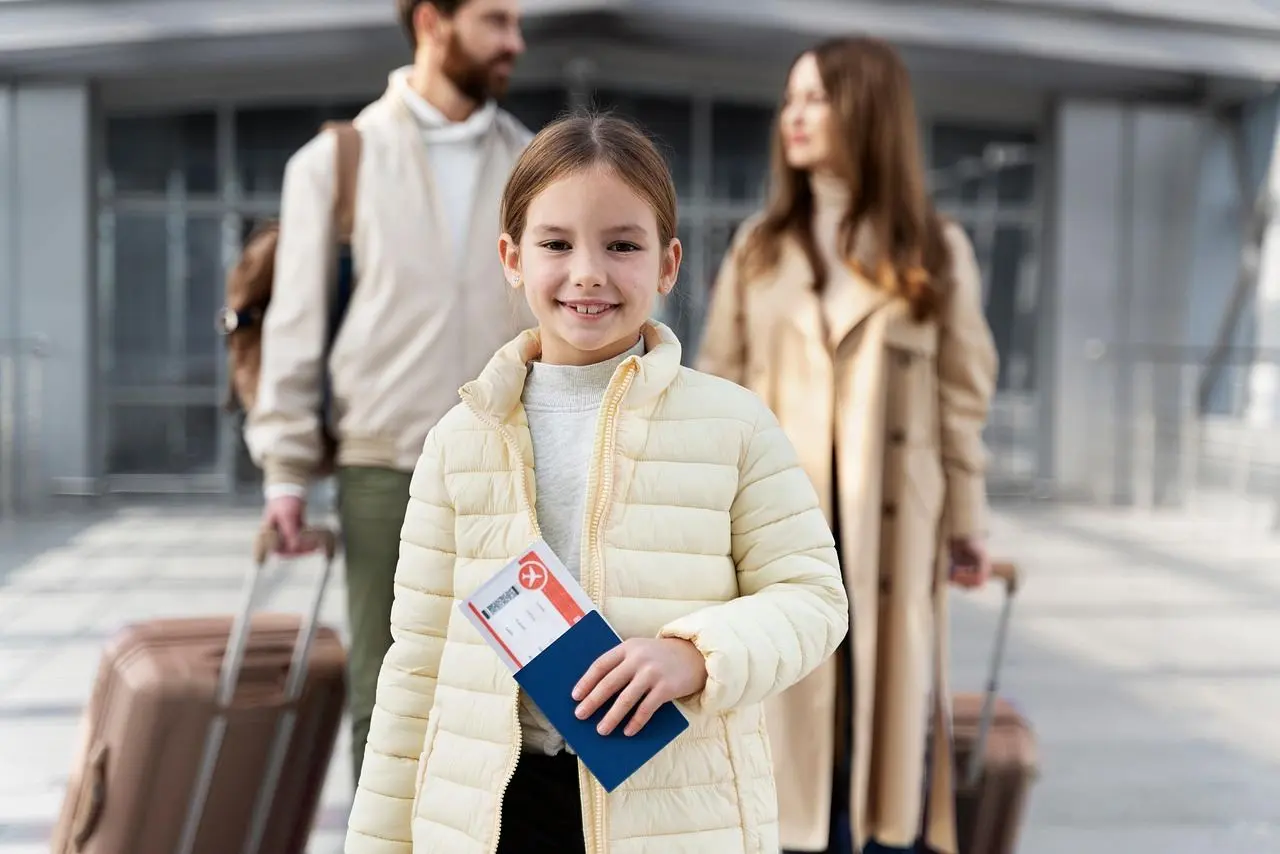
The Government of Canada describes a consent letter as a written statement showing that a child has permission to travel abroad from any parent or person with decision-making responsibility who is not travelling with them. Its guidance, on the consent letter page, recommends one for children travelling without one or both parents or legal guardians.
The U.S. advice is similar. If a child travels with one custodial parent, the letter should come from the other parent, and if the child travels with a guardian or alone, both parents should sign, according to USAGov.
USAGov also says it is preferred that the letter is in English and notarized. It gives suggested wording: “I acknowledge that my child is traveling outside the country with [the name of the adult] with my permission.”
When Canada suggests using one
The Canadian page lists several situations where a letter should be carried:
- A child travelling alone.
- A child travelling with only one parent or person with decision-making responsibility, even if both parents travel for part of the trip.
- A child in the care of friends or other family members.
- A child travelling with a group, such as a sports, school, musical or religious group.
It adds that a letter covers any international border, including the land border with the United States on a day trip. For age, it says any child under the age of 19 should carry one when travelling without both parents or persons with decision-making responsibility.
What to put in the letter
Canada notes there are no official guidelines for the content and format, but a letter usually includes the following, as set out on the same page:
- The name of the child.
- The names and contact information of the parents or persons with decision-making responsibility.
- The full name, address and contact information of the accompanying adult, and their relationship to the child.
- Where the child is travelling and for how long, including specific travel dates.
Digital signatures may be accepted, yet carrying the original signed letter is the recommended option. The reason given is that it reduces the likelihood of border officials questioning its authenticity, per the Government of Canada.
Family situations that need extra thought
Not every family fits the standard picture, and the official pages cover several variations. Each point below is drawn from the Canadian guidance unless it names USAGov.
- Existing parenting orders: a letter is still recommended even if an order or agreement lets one parent make travel decisions alone.
- Sole custody: USAGov says a parent with sole custody should carry a copy of the custody document.
- Frequent land crossings: USAGov says a parent who often crosses by land with a minor should always carry a letter of permission from the other parent.
- A parent living abroad: the letter should ideally be signed by that parent.
- A parent who has died: if you have sole decision-making responsibility, bring a copy of the death certificate.
- A child in temporary care: the letter should be signed by the appropriate child welfare agency representative.
- Dual or deemed citizenship: in some countries a child may be deemed a citizen if either parent is one, and may face that country’s entry and exit requirements.
Children travelling together from the same family may be listed on one letter. Separate letters are recommended for children who will travel separately for part of the trip.
Flying alone as an unaccompanied minor
A child flying without a parent brings the airline into the process. USAGov says the airline may require an unaccompanied minor or travel consent form, and a fee may apply.
The service provides an airline employee escort at the airport and on board. You and the person collecting your child may also need to give the airline identification and contact information.
Before the trip, USAGov suggests asking the airline about these points:
- Its age requirements for the unaccompanied minor service.
- Whether you can book a ticket with a connecting flight.
- Which documents and fees you are responsible for.
A practical checklist before you go
The steps below pull the guidance together. Adjust them to your destination and your family’s circumstances.
- Ask the destination’s embassy or consulate about entry and exit rules for children.
- Check that every child, including babies, has the passport or other document the destination needs.
- Decide whether a consent letter fits your situation, and have the absent parent or parents sign it.
- Pack supporting papers where relevant, such as a custody document or a death certificate.
- If a child will fly alone, contact the airline about its forms, fees and age limits.
Once the paperwork is ready, it helps to think about the journey itself. Our guide to public transport safety with children abroad covers getting around.
The same applies to where you stay. You can read about vacation rental safety with kids before you book.
Frequently asked questions
Do babies need their own documents?
Show answer
For entry into the U.S., yes. USAGov does not exempt infants from the requirement that each child holds travel documents in their own name, such as a passport or visa.
Is a consent letter required by law?
Show answer
The Government of Canada says a letter is not legally required in Canada, but immigration authorities, airline agents and Canadian officials may ask for one. Without it, you may face delays or a refusal to enter or exit a country.
Will a consent letter guarantee my child is allowed through?
Show answer
No. The Canadian guidance warns that a country’s immigration authorities may not treat the letter as sufficient, and recognition is not guaranteed. Confirm the destination’s requirements with its embassy, high commission or consulate.
What if I cannot get the other parent’s signature?
Show answer
The Government of Canada says that when consent is not possible or could be unsafe, you may wish to seek legal advice. This site is educational only and cannot advise on your case.