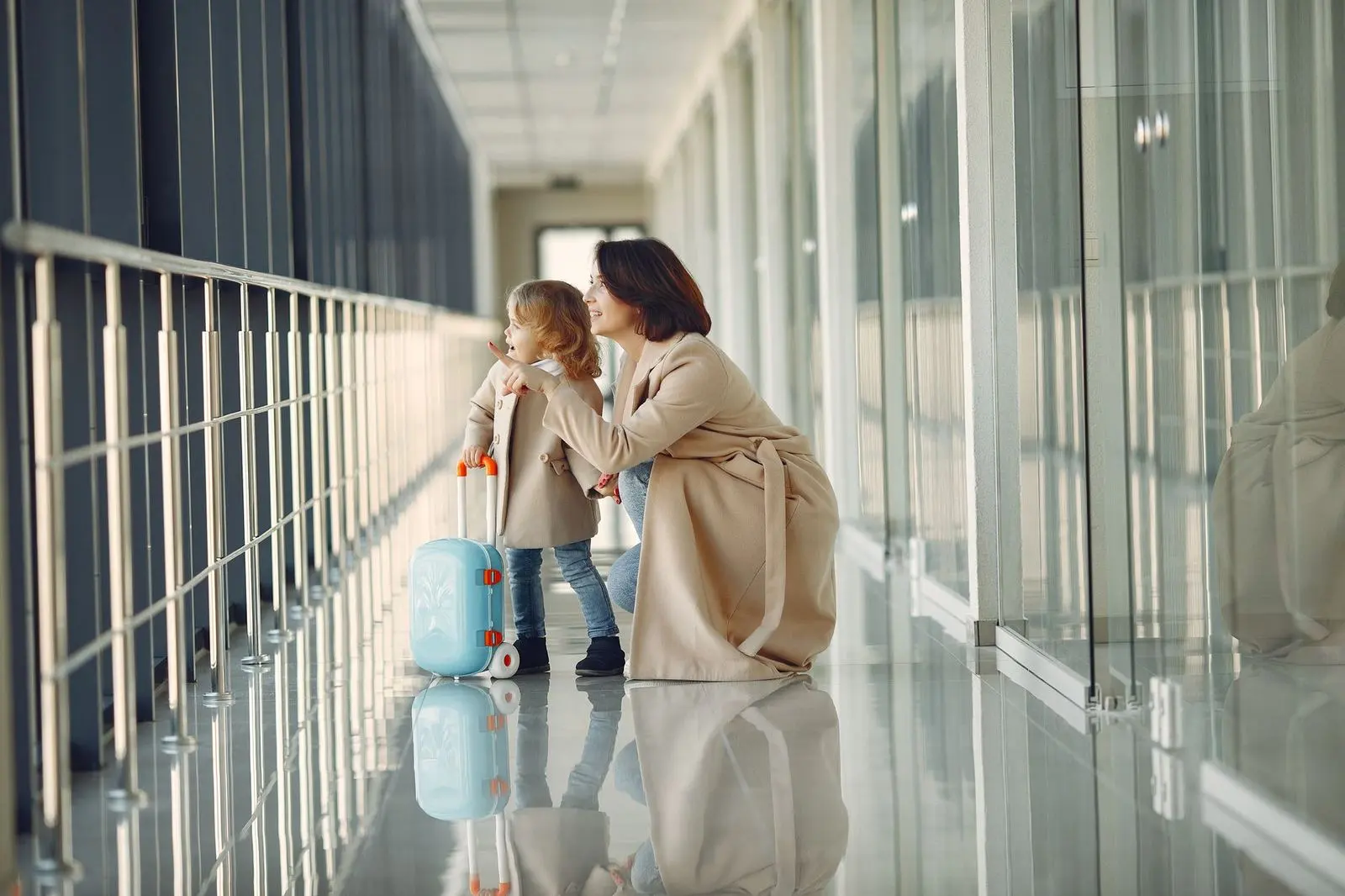
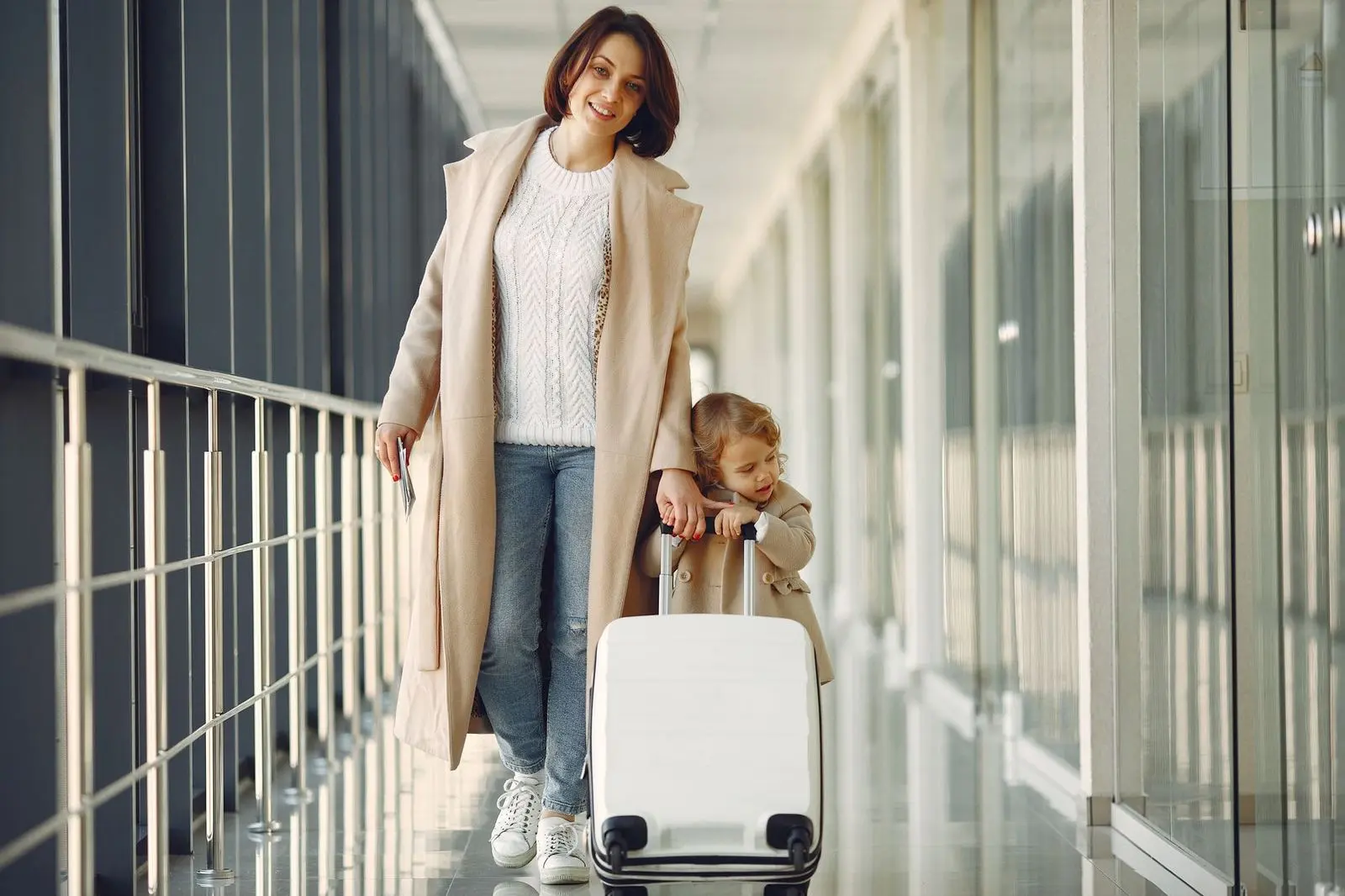
Worried about keeping your children close and calm at the airport? The best airport safety tips with kids: know the screening rules before you leave, keep everyone together, and plan a meeting point.
This guide sits within our wider overview of child safe family travel and focuses on the airport stage of the trip.
| Item | Value |
|---|---|
| Modified TSA screening applies to | Children who appear to be 12 years old and younger |
| Standard screening applies to | Children 13 years and older |
| ID at the travel document checking podium | Not needed under age 18 |
| Shoes, light jackets and headwear during screening | May stay on for children 12 and under |
| Formula, breast milk and toddler drinks in carry-ons | Allowed above 3.4 ounces (100 milliliters) |
The figures above come from TSA’s traveling with children page and its March 7, 2023 press release. Rules can change, so check the source before you rely on them.
Plan before you leave home
TSA says that a checkpoint visit with an infant, toddler or small child can go smoothly when travelers know what to expect and prepare in advance. The details are in its March 7, 2023 press release.
An FAA podcast episode published on May 10, 2023 features TSA staff who are also parents. They cover packing at home, including the surprise items children slip into luggage before you leave the house, as described on the FAA episode page.
A short home routine helps everyone arrive calmer:
- Empty and re-check every child’s backpack yourself, so nothing unexpected reaches the checkpoint.
- Keep formula, breast milk, toddler drinks and baby food together in one area of a carry-on bag so they can be taken out quickly.
- Save a recent photo of each child on your phone, wearing what they will wear on the day.
- Agree on a meeting point and tell older children what to do if you become separated.
- Decide which adult carries which child and which adult handles the bags at security.
How does checkpoint screening work for children?
TSA has developed modified screening procedures for children who appear to be 12 years old and younger, and officers consult the parent or traveling guardian about the child’s screening. Standard procedures apply to children 13 years and older, and carry-on property of every passenger, whatever their age, must be screened. This is set out on TSA’s traveling with children page.
As of TSA’s March 7, 2023 release, children 12 and under can leave shoes, light jackets and headwear on, and children under age 18 do not need to present ID at the travel document checking podium. The same press release adds that modified procedures aim to reduce the likelihood of a pat-down on a child.
A typical family sequence, based on that same TSA guidance, looks like this:
- Tell the officer at the start if you carry formula, breast milk, toddler drinks or baby food above the usual liquid limit.
- Put children’s toys, bags and blankets on the X-ray belt.
- Send strollers, baby carriers, car and booster seats and backpacks through the X-ray machine as well.
- Lift infants and children out of strollers and car seats and carry them through the walk-through metal detector; infants may stay in a sling or carrier.
Loading belongings is the moment when a child is most likely to wander. Keep one adult’s eyes and hands on each child until you are all through and have gathered your things.
Packing formula, milk and snacks for easier screening
Per the TSA release, formula, breast milk, toddler drinks and baby or toddler food, including puree pouches, are allowed in carry-on baggage in quantities greater than 3.4 ounces or 100 milliliters. They do not need to fit within the usual liquids bag, and TSA treats them as medically necessary liquids. Source: TSA, March 7, 2023.
TSA recommends, though does not require, carrying formula and breast milk in clear, translucent bottles rather than plastic bags or pouches. Pouches may not suit the bottle liquid scanner, so you could be asked to open them for another kind of screening. Ice packs, freezer packs and liquid-filled teethers are also allowed, and partly frozen items get the same screening as the liquids.
The FAA podcast episode also discusses which snacks to pack and the best place to put them, as the episode summary notes. A snack within easy reach can keep a tired child content during a long queue.
Keeping children together in a busy terminal
Airports are crowded, loud and full of distractions, so a simple family routine matters more than any gadget. These habits take little effort:
- Keep young children within arm’s reach, and use a stroller, carrier or hand-holding in crowded areas.
- Go to restrooms together rather than sending a child ahead alone.
- Teach children to stay where they are and to ask an airport or airline employee for help if they cannot find you.
- Tell the whole group about the meeting point and keep a phone number on each child’s person.
It is worth reading what to do if your child gets lost while traveling before you fly, so every adult in your group knows the plan.
Planning does not stop at the arrivals hall. Our guide on how to choose a child friendly hotel covers what to look for once you reach your destination.
Can family lanes and TSA PreCheck help?
As of Kiplinger’s report of 25 July 2025, the Families on the Fly campaign offers families with small children dedicated security lines at participating airports. The same Kiplinger article says these lanes can help provide an expedited security process.
That report also says families who sign up for TSA PreCheck receive a $15 discount off membership fees, and that about 99% of PreCheck passengers wait less than 10 minutes. Treat those figures as a snapshot from July 2025 and confirm them with TSA before you apply.
According to TSA’s March 7, 2023 release, parents enrolled in PreCheck may bring their children with them through a PreCheck lane. You can read the wording in the press release.
Kiplinger also reported that, as of its 25 July 2025 article, a new policy lets travelers in domestic airports keep their shoes on during screening. Details on Kiplinger explain the change, so check your airport’s signs on the day.
Children with medical conditions, disabilities or mobility aids
TSA asks you to tell the officer if your child has a disability, medical condition or medical device. Let the officer know whether your child can walk through the metal detector or needs to be carried by a parent or guardian. These instructions appear on TSA’s traveling with children page.
The same page says an officer will not remove your child from a mobility aid, wheelchair or scooter. Saying this early, calmly and in front of your child helps them understand what will happen next.
Frequently asked questions
Will I be separated from my child at security?
Show answer
No. TSA’s March 7, 2023 guidance states that children stay with their parent or guardian at security checkpoints. You can read it in the TSA press release.
Can I carry breast milk if my child is not with me?
Show answer
Yes. The same TSA release explains that no child or infant has to be present, or traveling with an adult, for a traveler to bring breast milk, formula or related supplies onto a flight. Read the full wording in the TSA press release.
What if a car seat will not fit through the X-ray machine?
Show answer
TSA says equipment too large for the machine gets a visual or physical inspection by officers instead. The FAA podcast with TSA staff also touches on this situation, according to its episode page. Ask the nearest officer how they want you to proceed.
Is the family lane open at every airport?
Show answer
Not necessarily. Kiplinger’s 25 July 2025 report describes the dedicated family lines as available at participating airports only, so look at your airport’s information before travel day. See the Kiplinger article for the context.