
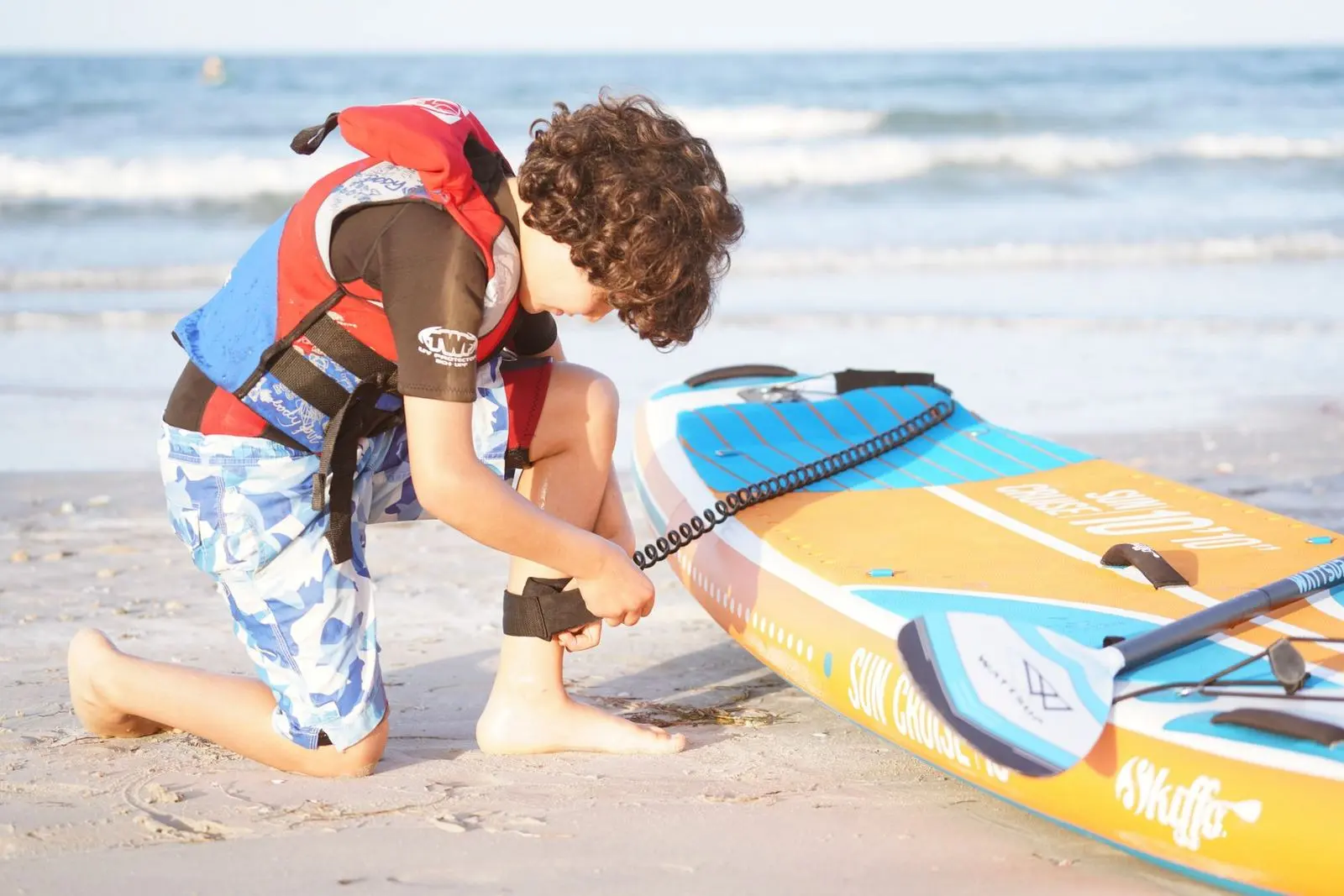
Planning a trip near water and worried about your children? Water safety for kids on vacation comes down to layers: an adult watching at all times, life jackets, and swim skills.
This guide is one part of the wider topic of child safe family travel.
| Item | Value |
|---|---|
| Leading cause of death for US children ages 1 to 4 | Drowning |
| Second-leading cause of unintentional injury-related death, ages 5 to 14 | Drowning |
| Earliest age to schedule swim lessons | At least 1 year old |
| Swim distance in a basic water-competency check | At least 25 yards |
| Water watcher distance from young children and beginner swimmers | Within an arm’s length |
These figures come from AAA Club Alliance and Nemours KidsHealth. They can change, so check the sources before you rely on them.
Why water needs extra attention when you travel
On holiday your routine disappears and water is everywhere: hotel pools, beaches, lakes, boat decks and splash areas. Unfamiliar places make it easier to lose track of where your children are.
Drowning is a leading risk for young people. According to the CDC figures reported by AAA, it is the leading cause of death for children ages 1 to 4 in the US, and the second-leading cause of unintentional injury-related death for ages 5 to 14.
The danger is easy to miss because drowning is often silent. A Red Cross expert quoted in the same AAA article says it can happen in as little as a minute.
The risk also shifts with age. KidsHealth notes that among young children most drownings happen in home pools or hot tubs, while in teens drowning is more likely in oceans, lakes and rivers.
Build layers of protection before you leave the room
No single habit keeps a child safe. The Red Cross expert in the AAA article says it takes layers of protection to help keep your loved ones safe.
The layers she describes, in plain terms:
- Close, constant attention to any child in or near water.
- Barriers such as four-sided fencing around pools and spas.
- Swimming and water-safety skills for every family member.
- Life jackets for children, inexperienced swimmers and anyone boating.
- Swimming only in areas protected by lifeguards.
The first layer is a water watcher: one adult whose only job is watching the water. KidsHealth says that adult should stay within an arm’s length of young children and beginner swimmers, and should skip the phone, chatting and alcohol.
If you travel with other adults, take turns. The AAA article advises making the current watcher identifiable to everyone in the group, and teaching children to ask for and receive permission before they enter any water.
Hotel, resort and rental pools
A lifeguard is helpful but not a substitute for your own eyes. According to AAA, even at resort pools, beaches and water parks with lifeguards, you still need a trusted adult watching only your group.
When you arrive somewhere with a pool, take a few minutes to check the setup. Here is what the sources suggest looking for:
- Fencing on all four sides with a self-closing, self-latching gate, as described by Stanford Children’s Health, which prefers mesh fencing so children cannot climb it.
- A fence of 4 feet or higher with a latch out of children’s reach, per MedlinePlus.
- Door and window alarms, and pool alarms, which KidsHealth lists as added protection.
- Hot tubs that are covered and locked when not in use, according to Stanford Children’s Health.
You cannot rebuild a hotel’s fence, so use these points when choosing where to stay and when deciding whether a small child can be left near a gate or balcony door. If a rental has a pool and no barrier, treat it as an open body of water and keep children within reach.
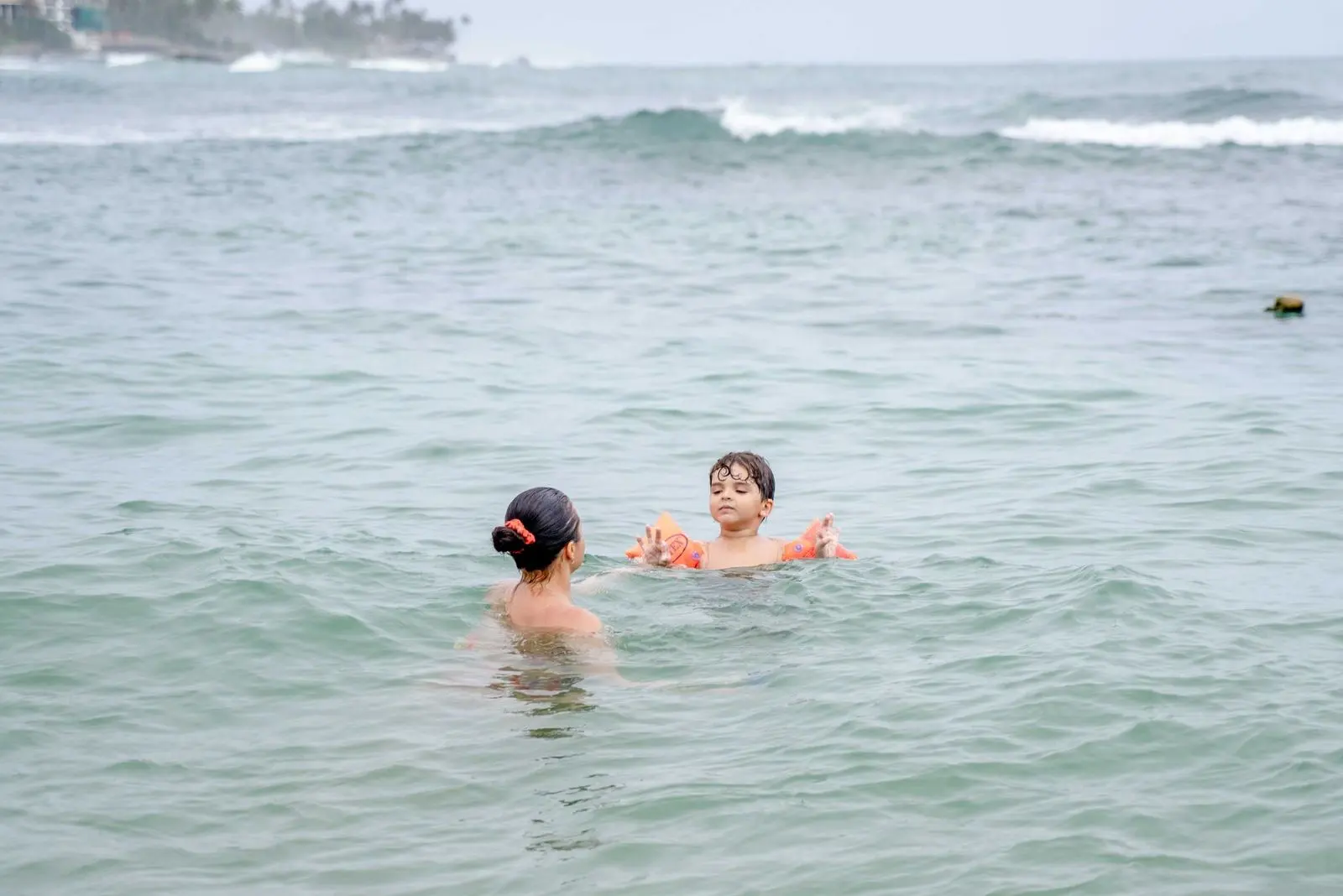
Inflatable aids need a caution too. Stanford Children’s Health says floatation devices are no substitute for touch supervision and warns that blow-up arm floaties or neck rings can deflate.
Indoors, KidsHealth recommends emptying bathtubs, baby pools and water buckets after use, which is worth doing in a rental with toddlers.
Beaches, lakes and other open water
Open water changes without warning, so your rules need to be stricter than at a pool. MedlinePlus gives these tips for all ages:
- Never swim alone, and know your limits.
- Never dive into water unless you know beforehand how deep it is.
- Stay out of strong currents even if you are a strong swimmer.
- Learn about rip currents and undertows and how to swim out of them.
- Do not drink alcohol or use drugs while supervising children around water.
Lakes carry their own hazards. The Red Cross expert quoted by AAA says lakes can hide structures, weeds or other objects under the surface, so swim only in designated areas, ideally with lifeguards on duty.
The same article says weak or inexperienced swimmers should wear life jackets in natural waters. This matters on holiday, when a child who is confident in a pool may never have swum in waves or cold lake water.
Older children need a conversation, not just a rule. KidsHealth points out that even strong teen swimmers are at risk, and suggests talking with them about never swimming alone.
Boats, ferries and paddle sports
A life jacket only works if it is on. As of the KidsHealth page reviewed June 2022, children and adults should wear Coast Guard-approved life jackets on a boat, even if they can swim, because one stored in a cabinet cannot protect someone thrown into the water.
The AAA article adds that everyone should wear one when boating, fishing or doing paddle sports. It also says to choose jackets sized by weight and matched to the activity.
A few boating habits from MedlinePlus:
- Do not overload the boat.
- Check local weather conditions and forecasts, and watch for dangerous waves and rip currents.
- If the boat turns over, stay with it until help arrives.
- Keep alcohol and drugs away from boating, and from anyone supervising children.
Cruises raise their own questions, so see our guide to cruise safety with kids for ship-specific points.
Swim skills, CPR and what to do in an emergency
Lessons are one layer, not a replacement for supervision. KidsHealth advises scheduling lessons once a child is at least 1 year old and suggests asking about free or reduced-rate classes.
The Red Cross expert in the AAA article prefers the idea of water competency, which she defines as a combination of three things:
- Water smarts: swimming only in designated areas, never alone, and always with adult supervision.
- Swimming skills: entering safely, floating or treading water for at least a minute, and swimming at least 25 yards to an exit before climbing out.
- Helping others.
If someone is in trouble, she recommends recognising distress, shouting for help and calling emergency services. Her rule is to reach or throw rather than go in: extend a reaching pole or throw something that floats, without entering the water yourself.
Afterwards, KidsHealth says every parent should know how and when to do CPR. Add water rules, a CPR refresher and a life-jacket check to your family travel safety checklist before you go.
Frequently asked questions
Do swim lessons mean my child is safe around water?
Show answer
Not on their own. Lessons make drowning less likely, yet a child still needs an adult paying attention, as KidsHealth explains.
Can I relax if a lifeguard is on duty?
Show answer
A lifeguard watches a whole area, so keep one adult focused on your own children. That is the advice of the Red Cross expert quoted by AAA.
Are arm floaties enough for a young child?
Show answer
No. MedlinePlus says air-filled or foam toys are not a replacement for life jackets in open water, and an adult still needs to be close by.
What should I tell teenagers before a beach or lake day?
Show answer
Tell them that being a strong swimmer does not remove the risk, and that nobody should swim alone. KidsHealth also links alcohol and drugs with a higher drowning risk.
What should I do if a swimmer is struggling?
Show answer
Call for help and use something that floats or a long pole to pull the person in, rather than swimming out yourself. The AAA article says only trained lifeguards should enter the water to assist.