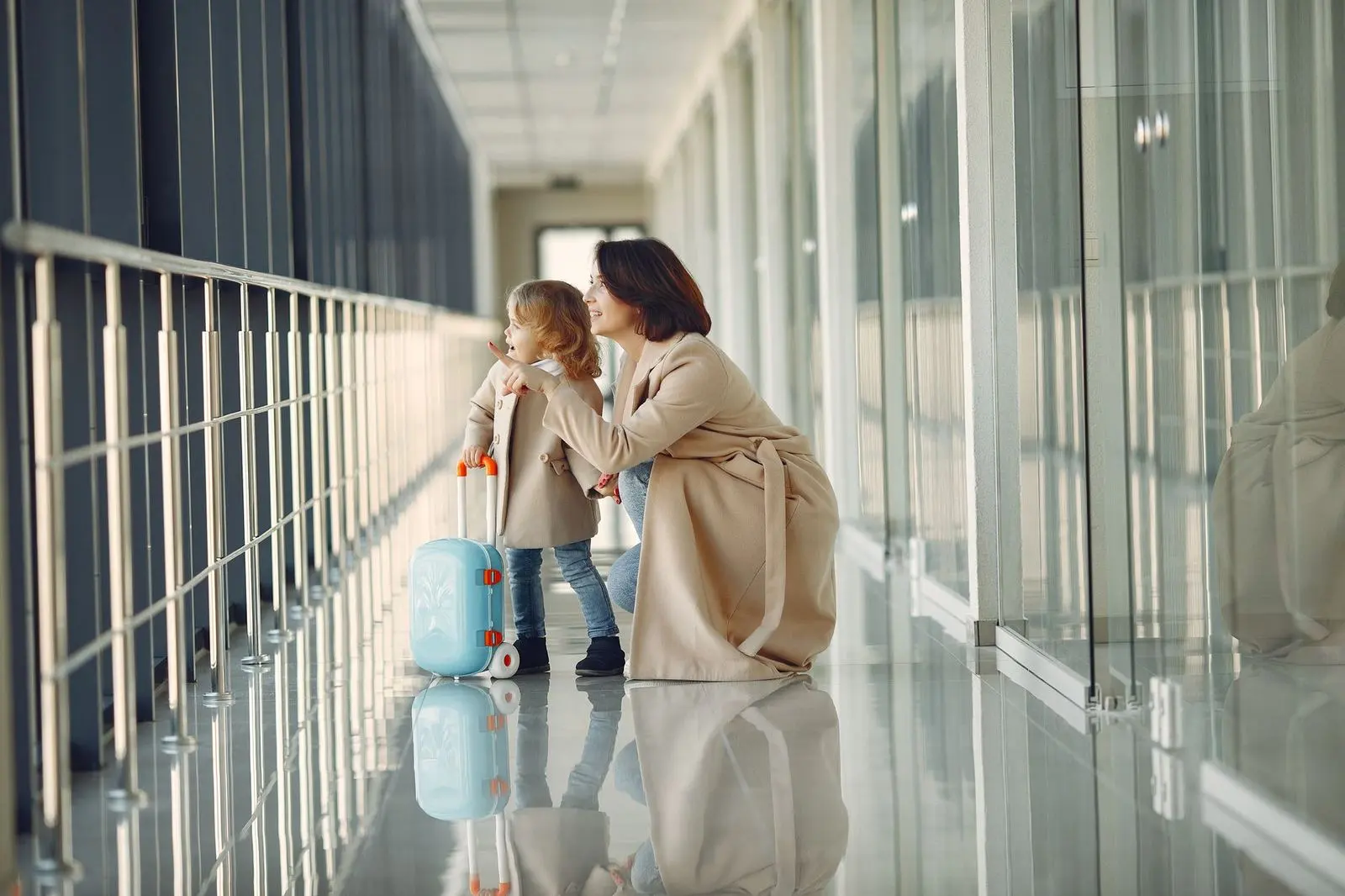

Packing for a trip with kids and worried you’ll miss something? This family travel safety checklist covers health visits, car seats, bugs, food and water, and what to do if your child feels unwell afterwards.
For the wider picture, the guide to child safe family travel covers the topic beyond this checklist.
| Checklist item | Key figure |
|---|---|
| Health visit before you leave | At least one month before departure |
| Infant MMR vaccine before international travel | 1 dose for infants 6 to 11 months old |
| Hand sanitizer when soap is not available | At least 60% alcohol |
| Break on a long road trip | About every two hours |
| Children in the rear seat of a vehicle | Under 13 years of age |
These figures come from the CDC Travelers’ Health page on children (last reviewed in August 2022) and the American Academy of Pediatrics travel tips. Guidance can change, so check the source before you rely on the figures.
Before you go: the planning checklist
The health visit comes first. The CDC advises seeing your child’s primary health care professional or a travel medicine specialist at least one month before you leave, so they can advise on destination-specific vaccines, medicines and information.
Routine vaccines matter as well. According to the CDC page last reviewed in August 2022, infants 6 to 11 months old should get 1 dose of MMR vaccine before international travel.
Work through this list in the weeks before departure:
- Share your itinerary and planned activities with your child’s provider so the advice fits your trip (CDC).
- Get travel insurance, learn where to get health care at your destination, pack a travel health kit and enroll in the Department of State’s STEP (CDC).
- If your child has a chronic illness or a weak immune system, ask the provider about special precautions (University Hospitals).
- Consider a basic first aid course, and invite older children to join you (University Hospitals).
Getting there: car seats, roads and airports
The AAP says all infants and toddlers should ride in a rear-facing car seat as long as possible, up to the highest weight or height the seat manufacturer allows. It also says children under 13 years of age should ride in the rear seat, as set out in its family travel tips.
Rules differ abroad. The CDC suggests you research car seat guidelines for the country you are visiting, because a seat from the United States may not be accepted there (CDC). If you rent a seat, the AAP says to check that it suits your child’s size and age, looks to be in good condition and comes with its instruction manual.
On the road, keep to these habits:
- Buckle everyone in, even in a taxi or ride-share, and set the example yourself (AAP).
- Never leave a child alone in a car, even for a minute (AAP).
- Never let anyone ride in the back of a pickup truck (CDC).
- Plan a break about every two hours on long drives (AAP).
At the airport, the AAP advises allowing extra time for security, especially with younger children, and checking the airline’s website for its car seat policy before you arrive. University Hospitals adds that you should bring your child’s seat from home unless you are certain one will be available at your destination (University Hospitals).

On the trip: food, water, bugs and animals
The CDC says diarrhea is among the most common illnesses in children who travel abroad. The best treatment is plenty of fluids, and you should get medical attention immediately if your child seems dehydrated, has a fever or has bloody stools (CDC).
Small habits lower the risk:
- Choose foods served hot, dry or packaged, and drink bottled, canned or hot drinks and only pasteurized milk (CDC).
- Use purified water for drinking, ice, brushing teeth and mixing formula (University Hospitals).
- Wash hands with soap and water; if none is available, use a sanitizer with at least 60% alcohol (CDC).
- Bring snacks from home for short trips, and enough formula and baby food for a 24-hour period (University Hospitals).
For mosquitoes and ticks, the CDC recommends insect repellent with an active ingredient it lists, always following the label. Spray it on your hands first, then apply it to a child’s face, and put sunscreen on before repellent (CDC).
Age limits apply. The CDC says not to use products containing oil of lemon eucalyptus or para-menthane-diol on children under 3 years old, and University Hospitals notes that repellent should not be used on babies under 2 months of age (University Hospitals). Netting over strollers and baby carriers adds another layer.
Children traveling to an area with malaria should take malaria prevention medicine, and your health care professional can say which one (CDC). Keep using bug spray even if your child takes it.
Animals deserve attention too. The CDC says children are at greater risk of rabies because they are smaller, may play with animals and may not report bites, so supervise closely and wash any bite thoroughly with soap and water before seeking medical attention immediately (CDC).
Staying together on busy days
University Hospitals suggests arranging a family meeting place at large attractions in case you get separated. Make sure children know what to do if they get lost in a strange city, especially abroad (University Hospitals).
The same source says some experts advise giving children a necklace or card with your address and phone number while abroad, but without their names.
Water needs its own plan. The CDC says to supervise children closely and have them wear a life jacket, and the guide on water safety for kids on vacation goes further on pools and beaches (CDC).
If you have not booked yet, the guide on how to choose a child friendly hotel covers what to look for in a place to stay.
After you get home
If your child recently traveled and feels sick, particularly with a fever, the CDC says to talk to their healthcare provider and tell them about the trip (CDC).
University Hospitals lists fever, rash, joint pain or red eyes as reasons to call and to say where you have been. It adds that a baby younger than 2 months of age with a fever of 100.4°F (38°C) or higher should always see a healthcare provider (University Hospitals).
Frequently asked questions
Why book the health visit early?
Show answer
The CDC explains that not all travel vaccines can be given to very young children, so earlier checks leave room to adjust. Some travel vaccines can also be given on an accelerated schedule, according to the CDC page.
Is the front seat ever fine for a child?
Show answer
The AAP warns against putting a rear-facing car seat in the front seat of any vehicle that has an airbag, as noted in its travel tips. The back is the safer place for children.
What helps with motion sickness?
Show answer
University Hospitals suggests talking to your child’s healthcare provider before you travel, since antihistamine use is restricted by age. A light meal or snack, and sitting where the vehicle moves least, can also help, according to University Hospitals.
Can a baby be held on your lap on a plane?
Show answer
The AAP recommends that families explore options so each child has their own seat. If you cannot buy a ticket, it suggests choosing a flight likely to have empty seats, as described in its family travel advice.